To become an au pair in the United States, applicants must meet specific age, education, childcare, and health criteria and participate through a designated J-1 sponsor organization.
These requirements ensure safe placement, program consistency, and visa compliance. Understanding these expectations helps candidates prepare effectively and avoid problems during the application or program year.
Au Pair Requirements in the United States Overview
The au pair program is a cultural exchange initiative for young adults who want to live with a host family in the United States while providing childcare.
It is designed for individuals who wish to experience American culture, improve their English skills, and support families with child-related tasks.
Applicants must satisfy age limits, background requirements, education standards, and program rules. Knowing these requirements before applying is important because they affect visa eligibility, placement with a host family, and overall program compliance.
What Is the Au Pair Program?
The au pair program is a cultural exchange opportunity rather than a traditional employment arrangement. Participants live with a host family, receive room and board, and assist with childcare while experiencing daily American life.
The purpose of the program is cultural immersion as well as structured childcare support. Most au pair placements last twelve months, with an option to extend for an additional six, nine, or twelve months.
The program is administered under guidelines established by the U.S. Department of State.
J-1 Visa Requirement for Au Pairs in the U.S.
To participate, all au pairs must obtain a J-1 Exchange Visitor visa. They may not self-petition for this visa. Instead, a designated sponsor organization manages the application process, conducts screening, and issues the DS-2019 form required for the J-1 interview.
After completing the program, au pairs receive a thirty day grace period to prepare for departure. Entry into the United States for au pair work is not allowed without participation through an approved sponsor.
Eligibility Requirements for the U.S. Au Pair Program
Age and Background Requirements
Applicants must be between eighteen and twenty six years old at the start of the program. They must also undergo a criminal background check and provide personal and professional references to show maturity, reliability, and suitability for childcare work.
Education and Language Requirements
A high school diploma or the equivalent is required for program participation. English proficiency is necessary for daily communication with children, host family members, and program coordinators.
Once in the United States, au pairs must take part in educational coursework to meet the program’s academic obligations.
Childcare Experience Requirements
Applicants must provide documented childcare experience. Many sponsor organizations require a minimum number of childcare hours, and participants who wish to care for infants must show infant care experience.
A sincere interest in child development and daily childcare responsibilities is essential for successful placement.
Health and Insurance Requirements
Applicants must receive medical clearance confirming they can safely participate in the program. They must also have accident and health insurance during their stay, which is usually arranged by the sponsor organization to ensure reliable access to medical care.
Au Pair Work Limits and Compensation Rules
The au pair program sets clear standards for working hours and compensation. Au pairs may work no more than forty five hours per week.
They receive a weekly stipend determined by federal guidelines, and the host family must provide room and board. Au pairs may not obtain additional employment or work outside the scope of their assigned childcare duties.
These rules help maintain safety, prevent overwork, and ensure compliance with visa conditions.
Typical Au Pair Responsibilities in the U.S.
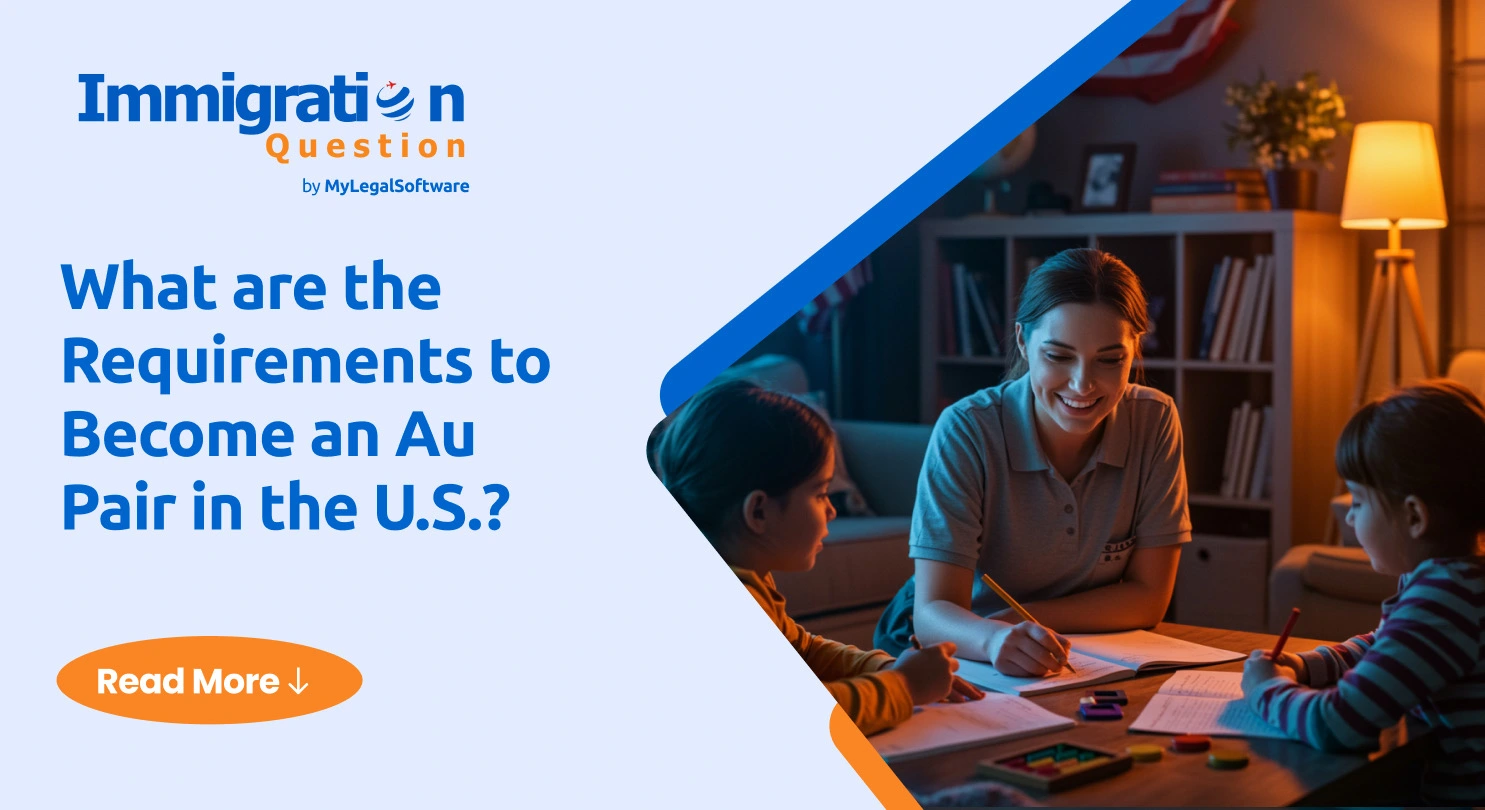
Au pair duties focus on childcare and tasks related to children. These responsibilities may include preparing meals for children, helping with homework, supervising activities, transporting children to school or appointments, and assisting with routines such as morning or bedtime schedules.
Au pairs may perform light housekeeping related to the children, such as cleaning play areas or handling children’s laundry. They are not allowed to perform heavy cleaning, deep housework, or tasks unrelated to the children.
Education Requirement for Au Pairs
During the program year, au pairs must complete six credit hours or the equivalent at an accredited U.S. educational institution.
Many sponsors assist participants in finding acceptable schools and may provide an educational stipend to help with tuition. Completion of the educational requirement is necessary for program fulfillment.
How Long Can an Au Pair Stay in the U.S.?
The standard au pair program length is twelve months. Participants may apply to extend their stay for six, nine, or twelve additional months if they meet eligibility requirements and if both the sponsor and host family agree.
After the program ends, au pairs receive a thirty day grace period to prepare for departure. Remaining in the country without valid status beyond this period is not allowed.
Legal Rights and Limitations for Au Pairs in the U.S.
Au pairs must comply with all J-1 visa rules and program requirements. Sponsor organizations oversee placement, host family expectations, working hours, and safety.
Participants have the right to receive the proper stipend, respect in the home, and support from their sponsor.
Violations of program rules may lead to early program termination, loss of visa status, or the need to leave the country. Understanding these rights helps protect both au pairs and host families.
Why Legal Support Matters for Au Pair Applicants
Legal guidance can help applicants understand visa rules, program limitations, and options for extensions or changes. Attorneys can explain J-1 requirements and help address concerns that arise during the program.
Although legal advice cannot guarantee results, it helps participants make informed decisions about their stay. For more information on immigration topics and program guidance, visit ImmigrationQuestion.com.
Key Takeaways
- The au pair program is a cultural exchange experience, not a traditional job.
- Participation requires a J-1 visa issued through a designated sponsor.
- Applicants must meet age, education, background, and health requirements.
- Au pairs may work up to forty five hours per week and receive a weekly stipend plus room and board.
- Only childcare and child-related tasks are permitted.
- Participants must complete six credit hours at an accredited institution.
- Program length is twelve months with possible extensions.
- Understanding rights and responsibilities helps ensure a successful experience.
Frequently Asked Questions
- Which visa do I need to become an au pair in the U.S.?
You need a J-1 Exchange Visitor visa issued through a designated sponsor organization. - How long can I stay in the U.S. as an au pair?
Au pairs may stay for twelve months, with possible extensions of six, nine, or twelve months, followed by a thirty day grace period. - Do I need prior childcare experience?
Yes. Most programs require documented childcare experience, often at least two hundred hours, along with references. - Can I work outside my au pair duties?
No. Working outside approved au pair responsibilities violates J-1 visa conditions. - How much are au pairs paid in the U.S.?
Au pairs receive a weekly stipend set by federal guidelines, along with room and board from the host family. - Can I study while working as an au pair?
Yes. Au pairs must complete six credit hours or the equivalent during their program year. - Can I change host families during the program?
Possibly. Changes depend on sponsor policies and must follow program rules. - Who can help if I have legal issues during my stay?
An immigration attorney familiar with J-1 visa rules can provide guidance and support.