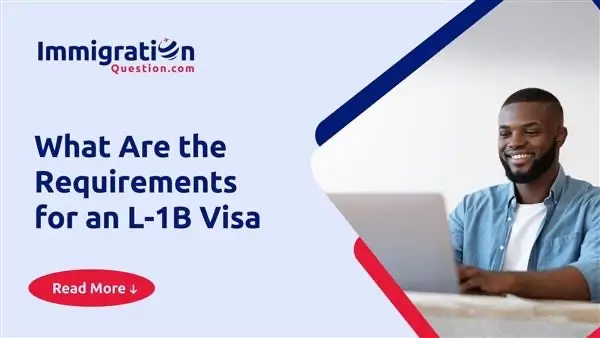
The L-1B visa allows multinational companies to transfer employees with specialized knowledge from a foreign office to a U.S.-based entity. The visa applies to employees whose skills or expertise are critical to the company’s operations in the United States. It differs from the L-1A visa, which applies to executives and managers.
The L-1B visa focuses on employees with knowledge that is unique or essential to the company’s products, services, or internal processes.
An employee must have worked for a foreign branch, subsidiary, affiliate, or parent company of the U.S. employer for at least one continuous year in the three years preceding the application.
The employment must provide the employee with experience and understanding of the company’s operations, technology, or proprietary methods that cannot be easily acquired elsewhere. The U.S. position must require the specialized knowledge the employee possesses.
Defining Specialized Knowledge
Specialized knowledge includes advanced understanding of the company’s products, services, or processes. It also includes familiarity with internal procedures and policies that exceeds general industry knowledge. Specialized knowledge can take many forms, such as technical expertise, experience with proprietary software or systems, or detailed knowledge of operational methods.
A software engineer who has spent years developing a proprietary system and is transferred to implement or support that system in the U.S. may qualify for an L-1B visa. A sales manager with deep knowledge of a company’s clients and sales methodology may also qualify. Knowledge must go beyond common skills or qualifications in the employee’s field. General industry knowledge does not meet the L-1B standard.
Eligibility Requirements
The primary eligibility requirements for the L-1B visa include continuous employment abroad, a qualifying corporate relationship, and a position in the U.S. that requires specialized knowledge.
Employment Abroad
The employee must have worked abroad in a specialized knowledge role for at least twelve continuous months in the three years preceding the petition. The employment must be with a qualifying foreign entity, such as a branch, parent company, affiliate, or subsidiary of the U.S. employer. The twelve-month period must be unbroken.
Qualifying Relationship
The foreign company and the U.S. entity must have a qualifying relationship. Acceptable relationships include parent, subsidiary, affiliate, or branch. The U.S. company must demonstrate shared ownership or control. The transfer must serve the operations of the U.S. entity.
U.S. Position
The employee’s position in the U.S. must require specialized knowledge. USCIS examines the role’s responsibilities and the employee’s contribution. The knowledge must be unique to the organization and necessary for the successful performance of the position. Documentation such as employment verification letters, internal records, or descriptions of proprietary processes may support the petition.
Transfers to a New U.S. Office
Transfers to a new U.S. office require additional conditions. The employer must have a physical office location secured. The employee must hold specialized knowledge necessary for the operation of the office. The employee must have worked abroad in a specialized knowledge capacity for one continuous year in the three years preceding the petition.
The U.S. office must be able to support a specialized knowledge position within one year of the visa approval. These requirements ensure the employee’s skills are used effectively in the new office.
Duration and Extensions
The L-1B visa is generally granted for one to three years. The initial period depends on whether the transfer involves an existing or new office. Extensions may be granted in two-year increments. The total stay for specialized knowledge employees cannot exceed five years. The duration is shorter than the L-1A visa, which can extend longer due to managerial responsibilities.
Documentation
Successful L-1B applications require detailed documentation. Employers typically provide proof of employment abroad, verification of the qualifying relationship, and evidence of the employee’s specialized knowledge.
Documentation may include work records, project portfolios, letters from supervisors, or descriptions of proprietary systems and methods. USCIS reviews these materials to confirm the employee’s role and expertise.
Application Considerations
Companies should assess whether the employee’s knowledge is clearly specialized and critical to U.S. operations. The role in the U.S. must correspond directly to the skills acquired abroad. Employers must show that the employee’s transfer advances the company’s operations or competitiveness. Applications often fail when the employee’s knowledge is too general or the connection between the foreign and U.S. entities is unclear.
Have questions about L-1B visas or other immigration matters? Network with a licensed attorney today via ImmigrationQuestion.com and get answers tailored to your situation.
Frequently Asked Questions
- What is the basic eligibility requirement for an L‑1B visa?
An L‑1B visa requires that an employee has worked for a qualifying foreign company for at least one continuous year within the three years before the petition. The employee must be entering the U.S. to work in a position requiring specialized knowledge of the company’s products, services, or processes.
- What counts as “specialized knowledge” for an L‑1B visa?
Specialized knowledge means advanced understanding of a company’s products, services, techniques, or internal procedures that is distinct from general industry knowledge and uncommon in the U.S. labor market.
- Do the U.S. and foreign entities need a specific relationship?
Yes. The foreign company and the U.S. employer must share a qualifying corporate relationship such as parent, subsidiary, branch, or affiliate. The relationship must be supported by evidence like ownership documents and organizational records.
- Can an L‑1B visa holder change employers while in the U.S.?
No. The L‑1B visa is tied to the specific employer that filed the petition. Changing employers requires filing a new petition with the new employer.
- How long can someone stay in the U.S. on an L‑1B visa?
An L‑1B visa is initially valid for up to three years. It can be extended in two‑year increments up to a maximum of five years. After reaching the limit, the employee must leave the U.S. before seeking another stay.