
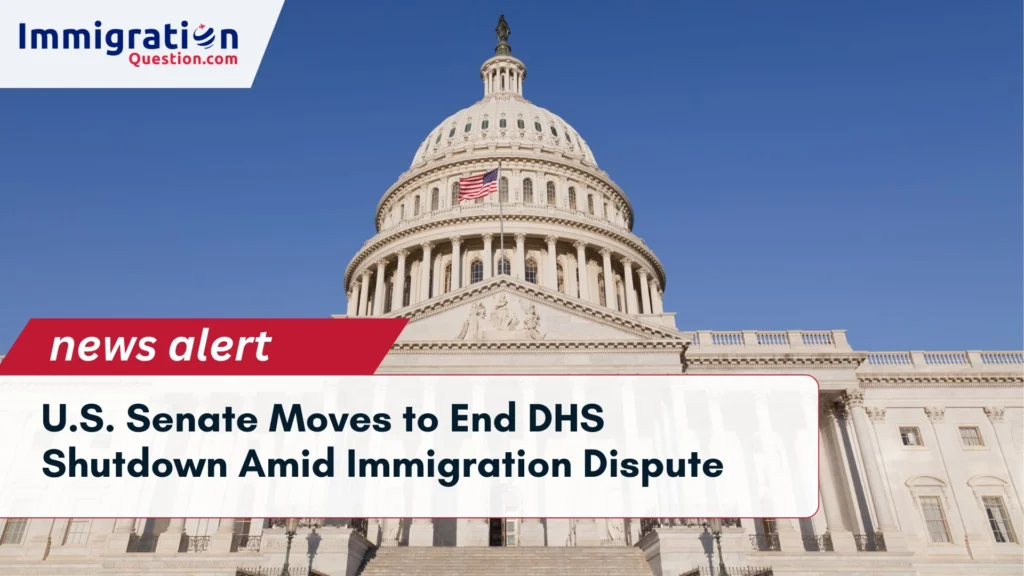
The U.S. Senate has voted to end a partial 40-day government shutdown by approving funding for the Department of Homeland Security (DHS), while excluding immigration enforcement agencies from the package. The measure now moves to the House of Representatives for final approval.
The shutdown, which lasted nearly six weeks, caused significant disruption across the country, particularly at airports. A major issue was the lack of funding for security personnel under the Transportation Security Administration (TSA), which operates within DHS.
Airport Disruptions and Workforce Impact
Approximately 50,000 TSA workers went unpaid during the shutdown, leading to staffing shortages, increased absenteeism, and resignations. As a result, airport security operations were severely impacted, with some locations operating at only 30% to 50% of their normal capacity.
Travelers faced long delays, with reports of hours-long security lines. In some airports, passengers navigated multiple queues before reaching checkpoints. Officials warned that continued disruption could affect national travel if funding was not restored quickly.
Political Standoff Over Immigration Enforcement
The shutdown stemmed from a political dispute over funding for Immigration and Customs Enforcement (ICE). Democrats refused to support a broader DHS funding bill without reforms to ICE, citing concerns about enforcement practices and accountability.
To reach a compromise, lawmakers removed ICE and parts of border enforcement funding from the bill. This allowed the Senate to pass the measure unanimously.
Democrats have pushed for reforms such as limits on enforcement practices, bans on racial profiling, and requirements for judicial warrants before entering private property. The debate intensified following controversial incidents involving ICE operations earlier this year.
Government Response and Next Steps
President Donald Trump indicated he would take executive action to ensure TSA workers receive back pay, emphasizing the urgency of restoring normal operations. Republican leaders criticized the situation, arguing that fragmented funding is not an effective way to manage federal agencies.
The current funding package includes support for key DHS functions such as disaster response and maritime security but leaves immigration enforcement unresolved.
What Comes Next
The House of Representatives will now decide whether to pass the funding bill. If approved, it will formally end the shutdown and allow affected workers to be compensated.
The situation highlights ongoing divisions over immigration policy and federal funding priorities. Future negotiations are likely to revisit these issues as lawmakers seek more permanent solutions.
For more updates on immigration law, policy changes, and enforcement trends, visit ImmigrationQuestion.com. Post your questions for free and get answers from licensed immigration attorneys.
Download the free ImmigrationQuestion.com app on Google Play Store and the Apple App Store.
Sources:
- https://share.google/d35pIVKJITOZwgqI3
- https://share.google/UM0yxCvX8N3UniuuC
- https://share.google/gF87EJ57HcXhlQBoS
- https://share.google/ryoAdlgSiv2gTs0zZ
ImmigrationQuestion.com is a networking platform founded by Immigration Attorneys. It serves as a meeting ground for licensed immigration attorneys and people with immigration questions. It is not a law firm. It is not affiliated with or endorsed by USCIS or AILA. Attorneys on this platform are independent and have the discretion to offer a free consultation and/or set their fees under the law.