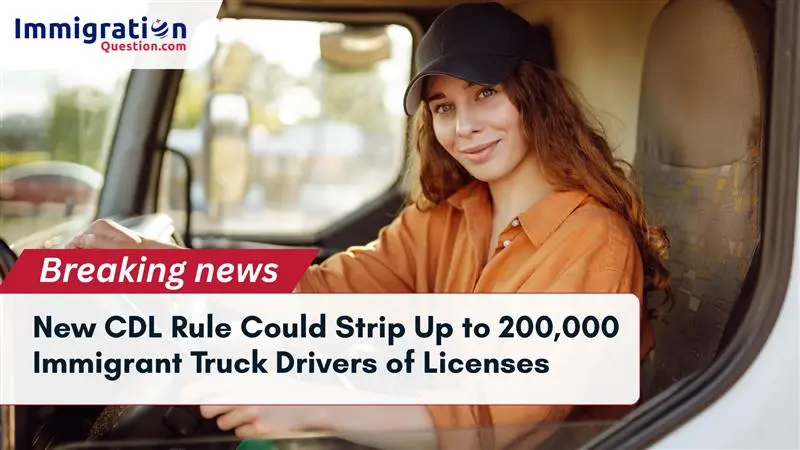
A new federal rule is set to significantly impact immigrant truck drivers across the United States, with officials warning that up to 200,000 drivers could lose their commercial driver’s licenses (CDLs) over time as the policy takes effect. The rule is part of a broader immigration and transportation crackdown under the Trump administration.
New CDL Rule Reshapes Eligibility
The policy, issued by the U.S. Department of Transportation, restricts who can obtain or renew a CDL by tightening eligibility requirements for non-citizens. Under the new rule, asylum seekers, refugees, and recipients of programs like Deferred Action for Childhood Arrivals (DACA) are no longer eligible to receive or renew commercial driver’s licenses.
Drivers who already hold valid CDLs will not lose them immediately, but many will be unable to renew their licenses once they expire, effectively ending their ability to work in the trucking industry.
Federal officials say the rule is intended to improve highway safety and ensure that only qualified drivers operate large commercial vehicles.
Safety Concerns Drive Policy
The administration has linked the rule to a series of high-profile trucking accidents involving non-citizen drivers. Officials argue that stricter licensing standards will help prevent future incidents and close gaps in how states issue commercial licenses.
In addition to limiting eligibility, regulators have also pushed for stricter oversight of training programs and increased enforcement of English-language requirements for drivers.
Supporters of the policy say these changes are necessary to protect public safety and maintain consistent national standards for commercial driving.
Impact on Drivers and Industry
The trucking industry, which relies heavily on immigrant labor, could face significant disruption. Immigrant drivers make up an estimated 5 percent of CDL holders and play a key role in transporting goods across the country.
Industry groups warn that removing thousands of drivers could worsen existing labor shortages and increase transportation costs. Higher shipping costs could eventually be passed on to consumers through rising prices for goods.
For many affected drivers, the rule could mean sudden job loss and financial instability, especially for those who have built careers in long-haul trucking over several years.
Legal and Public Response
The policy has already sparked legal challenges and criticism from advocacy groups. Opponents argue that there is no clear evidence that immigrant drivers are less safe than U.S. citizens and say the rule unfairly targets workers who are legally authorized to work. Some legal professionals also question whether the rule could face court challenges like earlier attempts to restrict CDL access for immigrants.
Looking Ahead
As the rule begins to take effect, its full impact will unfold gradually as licenses expire and renewal restrictions take hold. The policy is expected to remain a key point of debate, balancing safety concerns with economic and workforce realities in the trucking industry.
For more updates on immigration policies affecting employment and work authorization, visit ImmigrationQuestion.com.
Get answers to your immigration questions from licensed immigration attorneys. For attorneys, use our innovative 3-in-1 case management software to improve your practice. Download our free app on Google Play Store and the Apple App Store.
Resources
https://www.newsnationnow.com/us-news/immigration/immigrant-truck-driver-cdl-new-rule-trump-administration/
https://www.reuters.com/world/us/us-require-all-truck-driving-tests-occur-english-crackdown-fraudulent-schools-2026-02-20/
https://www.washingtonpost.com/business/2026/03/16/trump-immigrants-trucks/
ImmigrationQuestion.com is a networking platform founded by Immigration Attorneys. It serves as a meeting ground for licensed immigration attorneys and people with immigration questions. It is not a law firm. It is not affiliated with or endorsed by USCIS or AILA. Attorneys on this platform are independent and have the discretion to offer a free consultation and/or set their fees under the law.