
Humanitarian parole is a temporary, discretionary permission for certain individuals outside the U.S. to enter the country for urgent humanitarian reasons or significant public benefits. It’s decided on a case-by-case basis and does not automatically confer permanent status.
In this comprehensive guide, we aim to provide a clear understanding of what humanitarian parole is, who qualifies, how to apply, and what you need to know before considering it as an option. Whether you’re researching for yourself, a loved one, or simply want to understand the process, you’ll find straightforward answers to your questions here.
What Is Humanitarian Parole and Who Qualifies
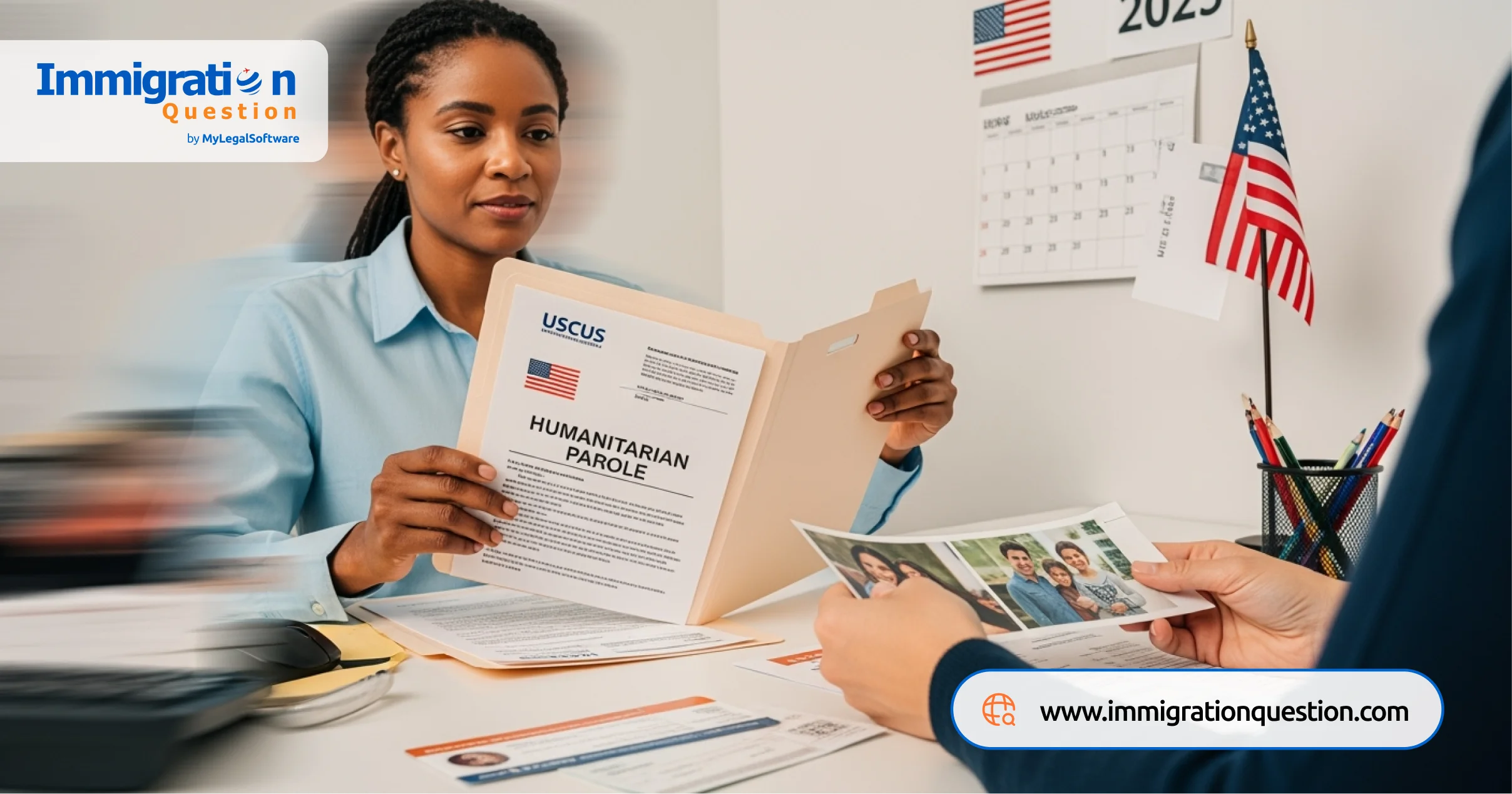
Humanitarian parole is temporary permission for people outside the U.S. to enter for urgent humanitarian needs or significant public benefit. It’s granted only in rare, exceptional cases and doesn’t lead to permanent status.
You may qualify if you:
- Need life-saving medical care unavailable in your country.
- Have a family emergency in the U.S.
- Can help with a matter of public benefit.
- Face life-threatening danger and no other legal entry option.
Each case is reviewed individually, and approval is never guaranteed.
How Does the Humanitarian Parole Program Work?

The humanitarian parole program allows certain people outside the U.S. to enter temporarily when there’s an urgent humanitarian reason or a clear public benefit. It’s not a regular visa and is used only in exceptional situations.
Here’s how it works:
- You (or someone applying for you) submits a request to U.S. Citizenship and Immigration Services (USCIS).
- You must show strong evidence of the urgent need and why no other visa or legal pathway works.
- USCIS reviews the case individually, and if approved, you’ll get permission to travel to the U.S. for a limited time—usually up to one year.
- Once in the U.S., you must leave when the parole period ends unless you apply for another legal status.
Why the Humanitarian Parole Program Exists
The humanitarian parole program is a crucial last-resort option for individuals who urgently need to be in the U.S. but have no other way to enter legally. It’s designed for truly exceptional cases, such as life-saving medical treatment, urgent family reunification, or situations of severe danger.
Temporary vs. Permanent Immigration Options
It’s important to note that humanitarian parole is a temporary solution. It ends when the set period is over. To stay longer, you’d need to apply for a different legal status through the proper immigration process.
Step-by-Step Humanitarian Parole Application Process
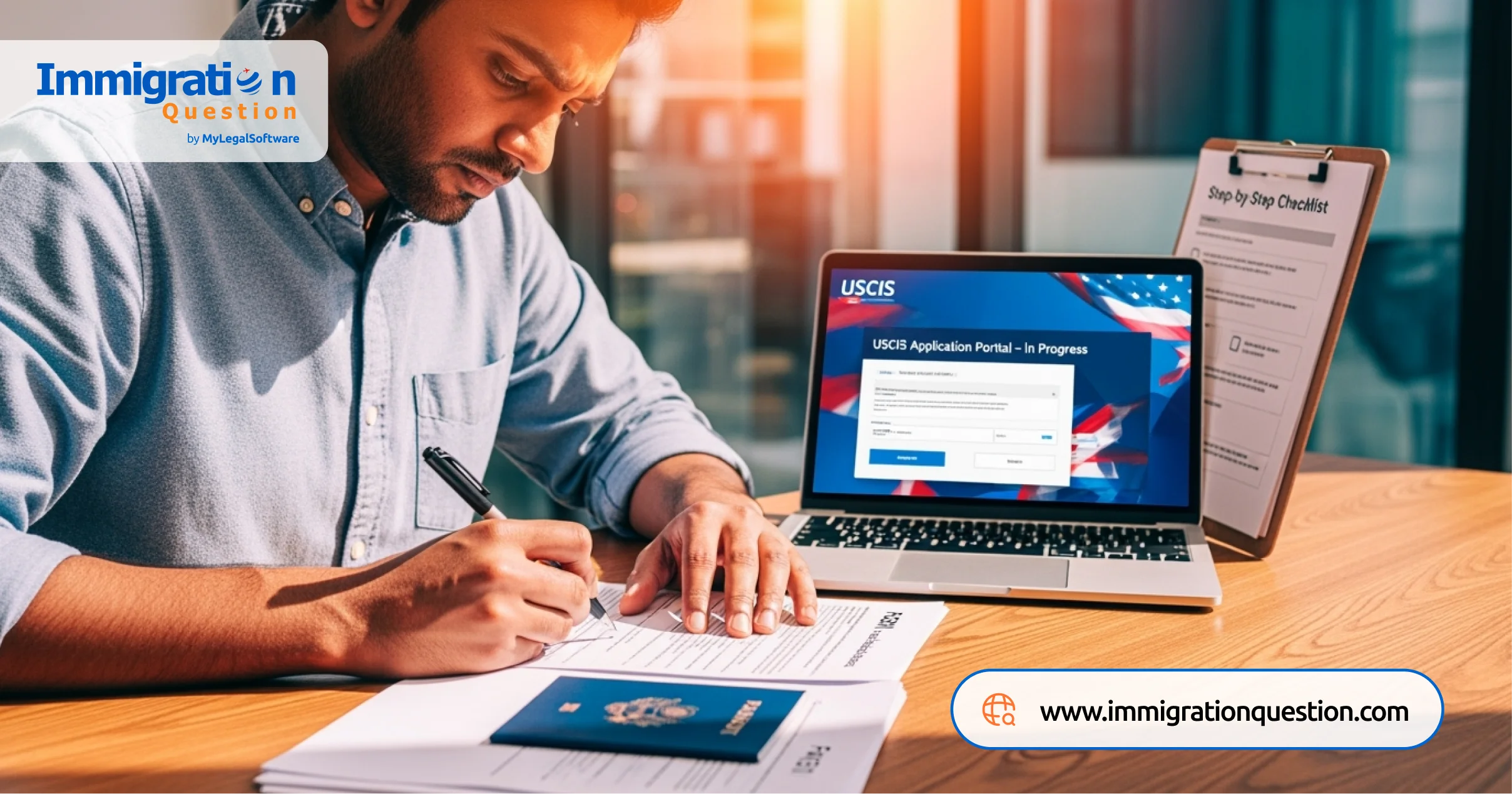
1. Complete Form I-131
Form I-131 is the official application for travel document. For humanitarian parole, you’ll need to check the section that applies specifically to humanitarian parole requests. Fill out the form carefully, ensuring all information is accurate and consistent with your supporting documents. Mistakes or missing information can delay your case, so double-check before moving on.
2. Complete Form I-134 or I-134A
Your humanitarian parole application must include proof that a sponsor will financially support you while in the U.S. A sponsor—someone already in the U.S.—plays a crucial role in this process and must fill out Form I-134 (Declaration of Financial Support) or Form I-134A (online version). This form shows USCIS that you will not become a public charge during your temporary stay. The sponsor should attach evidence such as tax returns, pay stubs, or bank statements.
3. Prepare a Personal Statement
This is your opportunity to take control of your application and explain your situation in your own words. Clearly describe:
- The urgent humanitarian reason for entering the U.S.
- Why other immigration options are not suitable or quick enough.
- Any consequences if you are not granted parole.
Be specific and truthful—details help USCIS understand the gravity of your request.
4. Gather Evidence
Strong Evidence increases your chances of approval. Depending on your case, this could include:
- Medical records from licensed healthcare providers.
- Police or legal documents if your safety is at risk.
- Letters from professionals or organizations confirming your need.
- Proof of relationship to a U.S.-based sponsor, if relevant.
Everything should be recent, relevant, and translated into English if originally in another language.
5. Pay the Filing Fee (or Request a Fee Waiver)
Check USCIS’s current fee schedule for Form I-131. If you cannot afford the filing fee, you may request a fee waiver by submitting Form I-912 (Request for Fee Waiver) with Evidence of financial hardship. Applications without the correct fee or waiver request will be rejected.
6. Submit to USCIS
Once all forms, Evidence, and fees are ready, it’s your responsibility to send your complete application packet to the address listed in the Form I-131 instructions. Use a reliable courier service with tracking to ensure it arrives safely. Keep a full copy of your application for your records—USCIS will not return your documents.
Required Forms and Supporting Evidence
Forms:
- I-131 – Humanitarian parole application.
- I-134 or I-134A – Financial support form.
- I-912 – Fee waiver request (if needed).
Evidence Examples:
- Hospital or doctor letters describing urgent medical needs.
- Police or government reports proving threats or danger.
- Travel documents, proof of identity, and any prior visa records.
USCIS Processing Times for Humanitarian Parole
Processing can take 90 to 120 days or longer, depending on case complexity. In life-or-death situations, you can request expedited processing by providing proof of the emergency. However, approval is never guaranteed, and decisions remain at USCIS’s discretion.
Common Reasons Humanitarian Parole Applications Are Denied
USCIS denies many requests because they don’t meet strict requirements. The two most common reasons are:
Insufficient Evidence
Missing, weak, or outdated documents—such as generic letters, incomplete medical reports, or unverified statements—undermine your case. USCIS must be convinced that your claims are real and urgent.
Failure to Prove Urgent Need
If you can’t demonstrate a clear, time-sensitive reason why you must enter the U.S. right away, your application is likely to be refused. Simply wanting to travel is not enough—there must be a critical humanitarian situation.
How to Avoid These Denials
- Think like an adjudicator – Ask yourself, “Would this evidence convince a stranger with no emotional connection to me?” If not, strengthen it.
- Show urgency beyond doubt – Use dated records, timelines, and proof that delaying entry would cause serious harm or risk.
- Layer your evidence – Combine medical/legal records with expert letters, photos, and news reports for a complete picture.
- Avoid generic statements – Be specific. Instead of “urgent surgery,” write “heart surgery scheduled for November 5, 2025, at XYZ Hospital.”
How Much Does It Cost to Apply for Humanitarian Parole?
The USCIS fee schedule does not always list humanitarian parole fees separately or in a clearly labeled section. Instead, the cost is tied to Form I-131, which is used for multiple travel document types, including humanitarian parole.
When applying for humanitarian parole, these are the main costs (via Boundless):
- Form I-131 (Application for Travel Document) – $575 (for Reentry Permit) and $630 (for Advanced Parole)
- Form I-134/I-134A (Declaration of Financial Support) – Free
- Biometrics Fee – $85 (if required)
Fee Waivers and Special Considerations
If the cost is a barrier, USCIS offers a fee waiver option:
- Submit Form I-912 (Request for Fee Waiver)
- Prove financial hardship (low income, public assistance, or other valid reasons)
- Include supporting documents like income statements, benefit letters, or proof of unemployment.
In urgent humanitarian cases, USCIS may also make exceptions, but these are reviewed on a case-by-case basis.
It is important to always double-check the latest fees on the USCIS website before applying, as they can change.
Get the Help You Need for Your Humanitarian Parole Application

Applying for humanitarian parole can feel overwhelming, but understanding the process — from forms and fees to the evidence you need—makes a big difference. Remember, USCIS looks closely at urgency and proof, so take the time to prepare a strong, well-documented application.
If cost is an issue, explore fee waivers and gather all supporting documents to avoid unnecessary delays or denials.
Humanitarian parole is not guaranteed; this is why the right guidance is important, especially if your case is delicate and complicated. If you are still confused about what to do, visit ImmigrationQuestion.com to ask your questions and receive fast, reliable answers. In many cases, free consultations are available to help you prepare your application and strengthen your case.
Frequently Asked Questions
1. What Evidence should I include with my humanitarian parole application?
Strong applications typically include medical records, legal documents, letters from doctors or officials, and proof of urgent humanitarian need. The more detailed and relevant your Evidence, the higher your chances of approval.
2. Can my humanitarian parole application be denied?
Yes. Common reasons for denial include insufficient Evidence, failure to prove urgent need, lack of a qualified sponsor, or incomplete forms. USCIS must be convinced that no other visa or immigration pathway is available.
3. How long can I stay in the U.S. with humanitarian parole?
Humanitarian parole is usually granted for up to one year, but the duration depends on your situation. You may request an extension before it expires if your urgent need continues.
4. Where can I get help with my humanitarian parole application?
You can visit ImmigrationQuestion.com to ask your questions and get fast, reliable guidance. In many cases, free consultations are available to help you prepare a strong application.
5. What is the difference between humanitarian parole and asylum?
Humanitarian parole allows temporary entry into the U.S. for urgent needs, while asylum is a protection granted to people already in the U.S. who fear persecution in their home country.
6. Can family members be included in my humanitarian parole application?
Each family member must file their own application, but you can submit them together with a cover letter explaining your family’s circumstances.
7. How do I prove an urgent humanitarian reason for parole?
You can provide medical diagnoses, letters from hospitals, proof of disasters, court orders, or government letters indicating the urgency and time sensitivity of your situation.