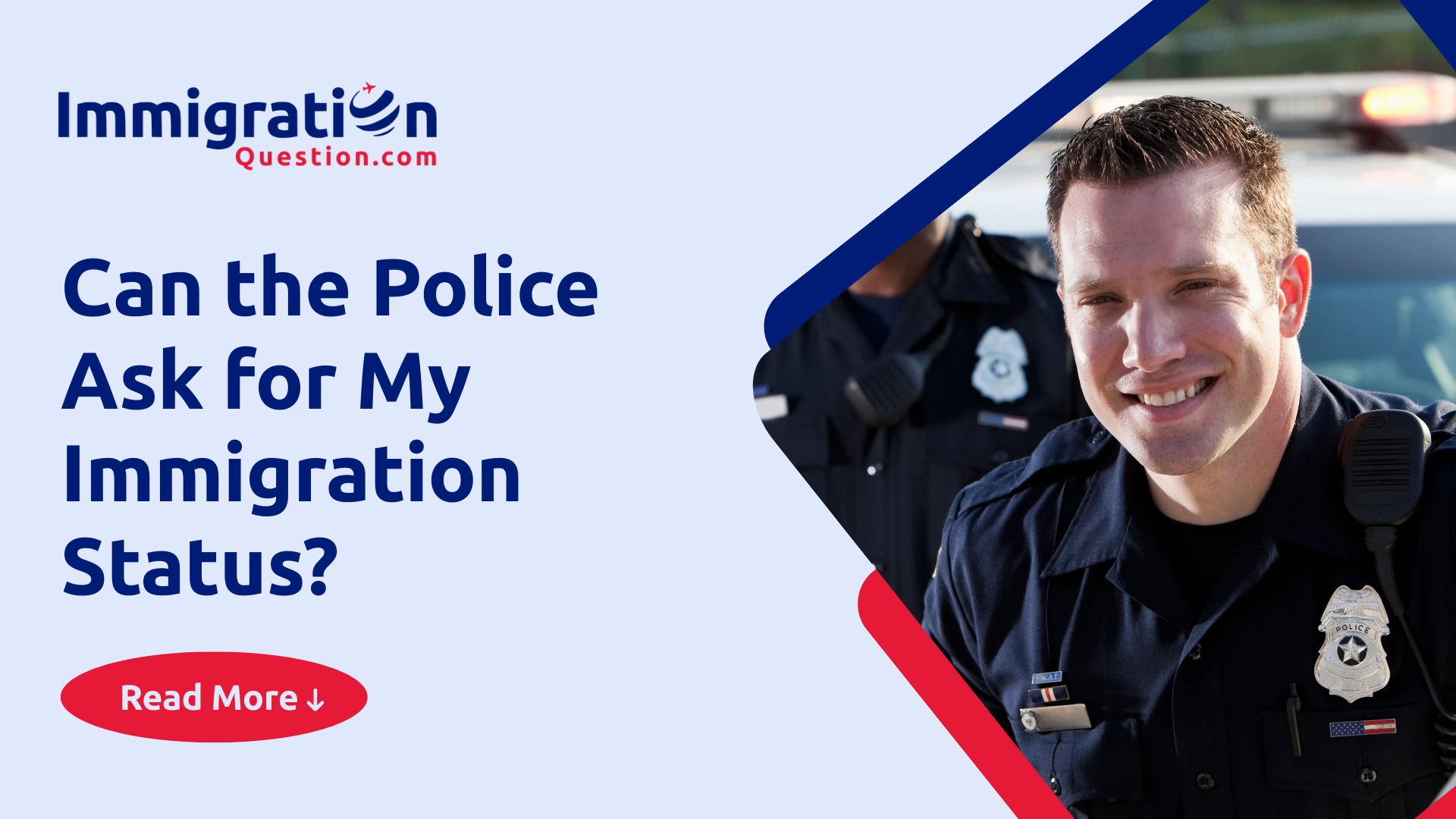
If you’ve ever wondered if the police can ask for your immigration status, this blog is for you.
U.S. immigration policy gives the police some room to ask questions, but it also protects your immigration rights.
Let’s walk through those protections.
Immigration Enforcement Is Mostly Federal
In the United States, immigration enforcement is mainly handled by the federal government, not local police.
Federal immigration laws can be found in the Immigration and Nationality Act.
And several federal agencies enforce those laws.
The main ones include:
- S. Immigration and Customs Enforcement
- S. Customs and Border Protection
These agencies have the authority to question people about their immigration status.
The main job of the local police is to enforce criminal law, not immigration law.
Can Police Ask for Immigration Status?
Police may ask about immigration status in certain situations. But there are limits tied to police authority.
If an officer lawfully stops you, they can ask questions related to identity or background.
This may include questions about citizenship or immigration status.
For example, during a traffic stop, an officer might ask:
- Where were you born?
- Are you a U.S. citizen?
But there is an important rule. The officer cannot extend the stop just to investigate immigration status.
If the stop was for a traffic violation, it must stay about that issue. Nothing more.
You Don’t Have to Answer Immigration Questions
You generally do not have to answer questions about immigration status. That protection comes from the U.S. Constitution.
Everyone in the United States has certain rights. Citizens and non-citizens.
One of those rights is the right to remain silent.
So if police ask about your immigration status, you can choose not to answer.
You can say:
“I am exercising my right to remain silent.”
But one thing you should never do is lie or present fake documents. That can create serious legal problems.
Local Police vs Immigration Agents
Local police and federal immigration agents don’t have the same role.
· Local Police
Local police departments enforce criminal laws, not immigration laws.
In many cities, officers do not routinely ask about immigration status.
Some cities even have policies limiting cooperation with immigration authorities.
These policies are often called sanctuary city policies. They are designed to encourage immigrants to report crimes without fear.
· Federal Immigration Officers
Federal officers have broader powers.
Agencies like U.S. Immigration and Customs Enforcement and U.S. Customs and Border Protection enforce immigration laws directly.
If an immigration officer asks a non-citizen for immigration papers, the person must show them if they have them.
That requirement is mandated by federal immigration law.
Situations Where Immigration Questions Are More Likely
In certain instances, immigration status comes up more often.
· Border Areas & Airports
At borders and ports of entry, officers have broader authority.
Travelers entering the country must answer immigration questions and present documents.
· Immigration Enforcement Operations
During immigration raids or enforcement operations, federal officers may question people about their immigration status.
U.S. Immigration and Customs Enforcement typically conducts these actions.
· Criminal Arrests
If someone is arrested, police may share information with federal immigration databases.
That information can reach immigration authorities, and then federal agencies may get involved.
· Cooperation Between Police and Immigration Authorities
Even though immigration enforcement is federal, local police sometimes cooperate with federal agencies.
This cooperation can include:
- Sharing fingerprints after an arrest
- Sending arrest records to immigration databases
- Honoring immigration detainers from ICE
But this cooperation varies.
Some cities limit cooperation, while others work closely with federal authorities.
So the experience can be very different depending on where you live.
Your Rights During Police Encounters
No matter your immigration status, you still have rights.
These protections apply to everyone in the United States.
Here are the most important ones.
· Right to Remain Silent
You do not have to answer questions about citizenship or immigration status. You can politely decline.
· Right to Refuse Searches
Police usually need a warrant or probable cause to search your belongings. Unless you give permission.
· Right to Leave
If you are not under arrest or detention, you can ask:
“Am I free to leave?”
If the answer is yes, you can walk away.
· Right to a Lawyer
If you are arrested or detained, you can ask for a lawyer. Ensure you stop answering questions until your attorney is present.
Do Immigrants Have to Carry Documents?
U.S. immigration law requires most non-citizens age 18 or older to carry proof of immigration status.
Examples include:
- A green card
- A work permit
- An I-94 arrival record
If a federal immigration officer asks for these documents, you should show them if you have them.
Need Immigration Advice? Ask a Licensed Attorney on ImmigrationQuestion.com
Understanding immigration rights and police authority can be confusing, especially when immigration laws and policies continue to change. Sometimes the safest step is to speak directly with a licensed immigration attorney who can explain how the law applies to your specific situation.
On ImmigrationQuestion.com, you can post your immigration question for FREE and receive answers from licensed U.S. immigration attorneys. If your situation requires legal help, you may also connect with attorneys who can review your case and potentially represent you.
If you’re unsure about your rights during police encounters or have questions about immigration enforcement, ImmigrationQuestion.com can help you get reliable legal support.
Frequently Asked Questions
Can police ask for immigration status in the United States?
In some situations, police officers may ask about immigration status during a lawful stop or investigation. However, they cannot extend the stop solely to investigate immigration status without additional legal reasons.
Do I have to answer questions about my immigration status?
Under the U.S. Constitution, you generally have the right to remain silent. You do not have to answer questions about where you were born, your citizenship, or your immigration status.
Can local police enforce immigration law?
In most cases, local police enforce criminal law, not immigration law. Immigration enforcement is primarily handled by federal agencies such as U.S. Immigration and Customs Enforcement and U.S. Customs and Border Protection.
When are immigration questions more likely to happen?
Immigration questions are more likely during border inspections, immigration enforcement operations, or after a criminal arrest, where information may be shared with federal immigration authorities.
Do immigrants have rights during police encounters?
Regardless of immigration status, individuals in the United States have constitutional protections. These include the right to remain silent, the right to refuse consent to searches, and the right to ask for a lawyer if arrested.
What should I do if I’m unsure about my immigration rights?
If you are unsure about your rights or how immigration law applies to your situation, it may be helpful to consult a licensed immigration attorney. Platforms like ImmigrationQuestion.com allow you to ask questions and receive guidance from licensed immigration lawyers.